
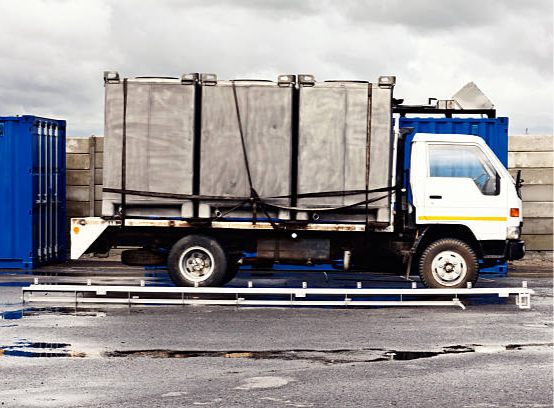
A weighbridge is a critical long-term investment for your business, significantly impacting operational success in sectors like logistics and agriculture. A well-chosen truck weighing machine:
- Enhances operational efficiency and accuracy
- Aids effective cost management
- Boosts profitability
However, with many types and features, choosing a weighbridge can appear complex. This weighbridge buying guide clarifies this. Ahead, you’ll find essential insights to align your choice with your business objectives, ensuring lasting value and a sound ROI calculation.
Core Requirements for Your Weighbridge Investment (H2)
Before exploring models, your weighbridge buying journey starts with:
- A thorough operational needs assessment
- A formal site survey (rigorous evaluation of available space)
- Ground stability assessments
- Vehicle type identification (commercial trucks, tippers)
- Maximum load capacity calculation
- Estimation of daily frequency of use for weigh-ins
- Drainage inspections
To methodically assess your needs before purchasing a weighbridge, answer these core questions:
- Will the system weigh agricultural machinery alongside standard HGVs?
- What is the heaviest trailer’s gross weight configuration?
- What are the expected peak-period traffic volumes and average weigh-ins/hour?
- What are the clear dimensions (LXWXH) for the deck and apron zones?
- Are there expansive clay layers or flood history that could affect site stability?
Mastering this assessment forms the blueprint for how to choose the right weighbridge. Next, let’s explore the critical weighbridge features and technology.
Evaluating Critical Weighbridge Features and Technology
Understanding technical specifications forms the cornerstone of choosing a weighbridge, as long-term performance and reliability depend fundamentally on the quality of key components and materials. From stainless steel load cells to advanced software integration, every component demands careful evaluation.
At its operational core, load cells serve as the weighing system’s precision engine—their build quality and design directly impact measurement consistency, supported by instrumentation (weighbridge component) systems.
- Digital load cells deliver precision and error-correction protocols.
- Analogue load cells are prone to signal interference but cost-effective for low-intensity use.
- Stainless steel canister-type load cells with IP69K international classification sealing provide unrivalled environmental protection (for operations facing corrosive washdowns or sandstorms).
Your weighbridge deck (general, steel, concrete) selection determines structural integrity through these key trade-offs:
- Steel weighs less than concrete while maintaining axle resistance.
- Concrete decks offer long lifespans in stable soil but require precise installation.
- Hybrid designs blend material advantages with composite stress distribution.
Robust instrumentation complements physical components. User-friendly interfaces must withstand extreme temperatures while integrating natively with ERP systems. Modern systems now feature cloud sync capabilities.
Three non-negotiable technical safeguards maintain/ensure legal compliance:
- Legal for trade certification
- Annual calibration (regular basis) against NMI-approved test weights
- Tamper-evident audit logs to preserve transaction integrity
By assessing these elements, decision-makers sidestep short-sighted cost savings in this vital truck weighing machine investment. With robust technical foundations established, let’s examine how to select the weighbridge that fits your business next.
Also Read: Exploring Essential Weighbridge Uses in Modern Industry
How to Choose the Right Weighbridge for Business: A Framework for Selection
For those who choose the right weighbridge for business, it is essential to prioritise reputable suppliers demonstrating manufacturing pedigree through documented processes.
The strategic advantage of single-source responsibility becomes evident when integrating peripheral systems. This unified approach ensures:
- Seamless calibration data flow between indicators and ERP systems
- Single-point technical support for electrical gremlins affecting multiple components
- Guaranteed materials compatibility across load cells, decks, and junctions
To avoid post-installation nightmares, scrutinise these seven areas through an objective supplier vetting checklist:
- Request third-party certifications that validate Legal Metrology compliance.
- Confirm that load cell suppliers maintain IECEx certification for hazardous environments.
- Specify mean-time-to-repair benchmarks for monsoon-induced sensor failures.
- Request three client references from mining sector peers.
- Detail corrosion protection testing for coastal installations.
- Provide warranty claim resolution timelines.
- Verify availability of NABL-approved test weights within 200 km.
Ultimately, calculating the total cost of ownership exposes false economies. This completes your strategic toolkit for purchasing a weighbridge that delivers compliance and profitability.
Securing Lasting Value From Your Weighbridge Purchase
While selecting a weighbridge, a structured approach—evaluating your operational needs, component quality, supplier reliability, and the total cost of ownership over upfront price—mitigates risks and ensures success. This diligence delivers true business value and paves the way for:
- Enhanced operational efficiency
- Steadfast compliance
- Sustained long-term reliability
If you’re a business looking to enhance your operations with trusted industrial weighing solutions, Giri Brothers in Chennai, Tamil Nadu, offers the expertise and advanced systems you need. Reliable, scalable solutions to drive efficiency and long-term value for your business!